


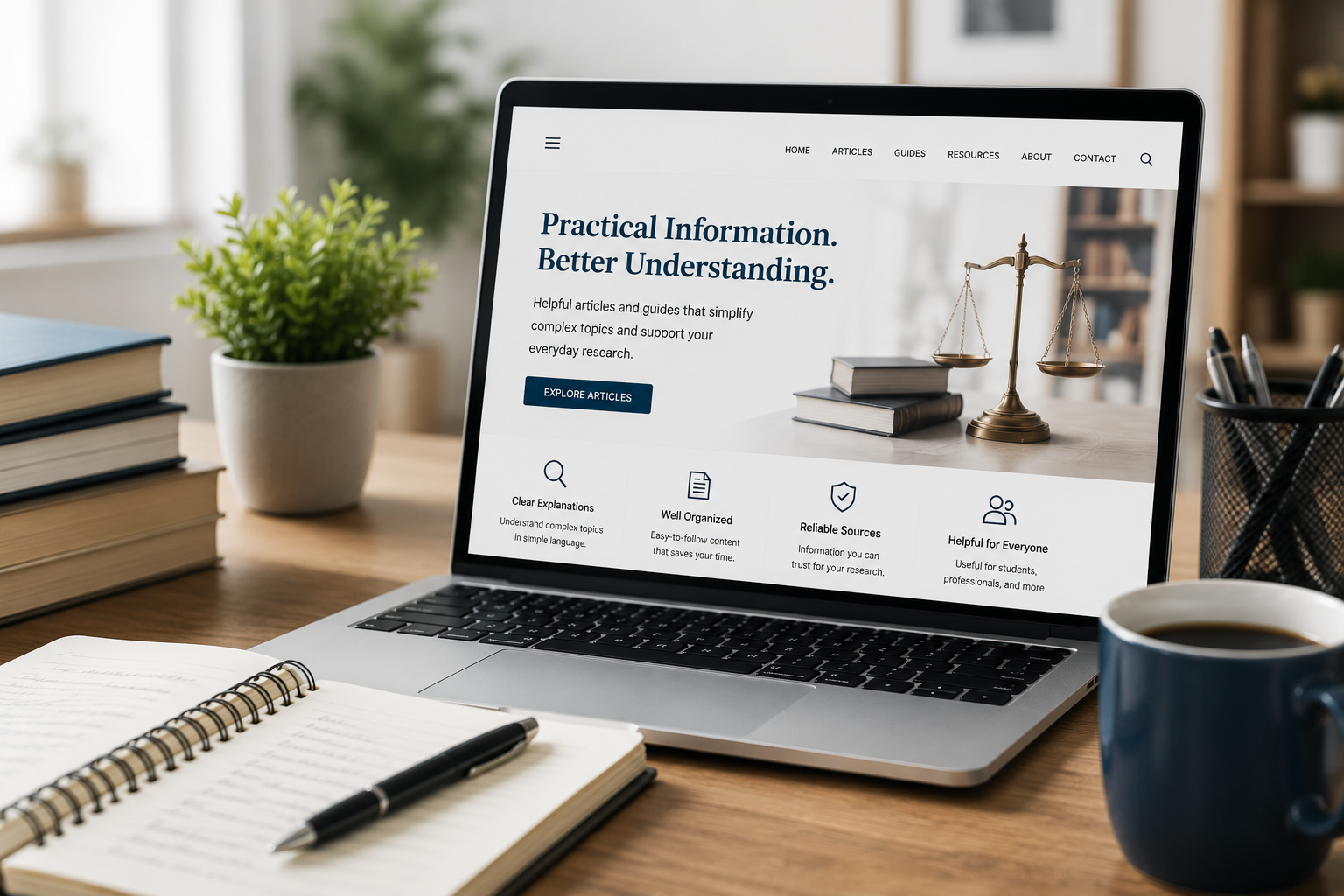
The internet has changed the way people learn about unfamiliar subjects. Instead of searching through several printed sources, readers can now find explanations, comparisons, and background information within seconds.
However, having access to information does not automatically mean that the information is useful. The structure, clarity, relevance, and reliability of a website all influence how valuable it becomes to its readers.
Start With the Basics
When people search for a complicated subject, they usually need a simple explanation first. Technical terminology without context can make a topic harder to understand.
A strong online article should therefore introduce the subject before moving into more detailed information. Readers should understand what they are researching and why the topic matters before they encounter specialist terminology.
This approach creates a smoother learning experience.
Keep Information Organized
Organization is one of the most important elements of an effective website. Clear headings allow readers to move directly to sections that interest them.
Short paragraphs also improve readability. Large blocks of text can be difficult to scan, particularly on smartphones.
A useful digital information platform should make it easy for visitors to understand the main points without unnecessary repetition.
Explain Important Terms
Specialist subjects often contain words that ordinary readers may not understand.
Explaining important terminology in simple language can make online content much more accessible. Instead of assuming that every visitor already understands the subject, good articles provide enough background for beginners to follow the discussion.
This is particularly important for legal, financial, technical, and professional topics.
Help Readers Ask Better Questions
One of the biggest advantages of online research is preparation.
Someone who is considering professional assistance may first search for general information to understand the subject. After reading several reliable explanations, they may have a better idea of what they need to ask a professional.
Online resources can therefore support better communication without replacing expert advice.
Compare Different Sources
Readers should avoid depending on one website for every important decision.
Comparing several reputable resources can reveal differences in terminology, explanations, and local requirements. This is especially important when information may vary according to location or circumstances.
A website should be treated as one part of the research process rather than the only authority.
Check Whether Information Is Current
Online information can become outdated.
This is especially relevant to subjects affected by changing regulations, policies, technology, or professional standards.
Before relying on information for an important decision, readers should check whether the material is recent and whether it applies to their particular situation.
Accessibility Matters
Useful information should be easy to access.
Responsive design, readable fonts, sensible navigation, and mobile-friendly pages all contribute to a better experience.
Readers should not have to struggle with complicated navigation just to find a basic explanation.
Avoid Unnecessary Complexity
More information does not always mean better information.
An article can be detailed while remaining easy to understand. The goal should be to provide enough context to answer the reader’s question without filling the page with unnecessary technical language.
Simple writing often makes specialist subjects more approachable.
Online Resources and Professional Advice
Online resources are valuable for education and preparation, but they should not be confused with personalized professional advice.
A general article cannot consider every detail of an individual situation. When a matter has important legal, financial, or personal consequences, qualified professional guidance may be necessary.
Building Better Research Habits
Good research involves several steps. Readers should define what they want to know, search for reliable resources, compare information, check dates, and seek professional assistance when appropriate.
These habits can make online research more efficient and reduce the risk of relying on incomplete information.
The Future of Digital Information
As online publishing continues to grow, readers will have access to an increasing number of specialist resources.
The websites that stand out will not necessarily be those with the most content. Instead, useful platforms will focus on clarity, organization, relevance, and responsible publishing.
For more general educational and informational content, visit PureHealthNest.
For readers, this means that choosing the right information source is becoming just as important as searching for information itself.