


Why customization beats one-size-fits-all
Manufacturers face a spectrum of load profiles—continuous production lines, intermittent peak loads, and critical standby segments. Choosing a bespoke solution often reduces capital and operational risk compared with generic skid-mounted units. Early in the spec stage engineers increasingly cite modular control, optimized fuel maps, and matched alternators as differentiators; examples include Perkins genset deployments on Chinese coastal manufacturing sites where harmonics and reactive load behaviors matter. Customization lets you align kVA rating, generator set packaging, and switchgear to actual site conditions rather than oversizing by default.
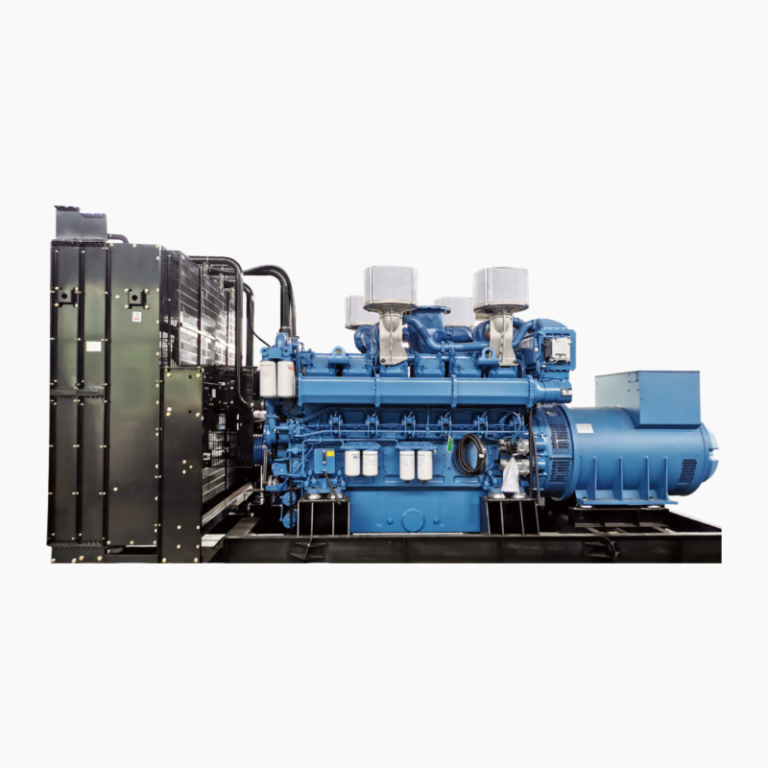
Direct comparative breakdown: specs that change outcomes
Compare two parallel procurement choices by metric:
– Capacity fit: a 500 kVA unit at 0.8 power factor delivers roughly 400 kW of usable standby power; pick margins based on motor starting currents and transient duty. – Controls and communications: off-the-shelf usually has basic ATS/PLC integration; tailored builds add CAN/Modbus gateways and remote telemetry. – Thermal and acoustic engineering: bespoke enclosures adapt cooling circuits and sound attenuation to local ambient temperatures and urban density. – Lifecycle cost: fuel consumption curves, scheduled maintenance intervals, and tower crane footprint all drive total cost of ownership.
The comparative insight is clear: the smallest spec tweak—generator alternator sizing or governor tuning—can cut fuel by several percent under real-world load banks and reduce failure modes tied to harmonic distortion.
Operational production teardown: where the factory decisions matter
On the shop floor, production choices cascade. Source long-block engines with proven governor types, select alternators with skewed rotors for reduced cogging, and validate enclosure welds against salt-spray if the site is coastal. A controlled teardown of the supply chain should validate the parts pedigree: genset controller model, alternator insulation class, and ATS relay rating. In that operational production teardown we reference assemblies like the Perkins genset 500 kva—you want to confirm the engine serial traceability and witness factory FAT (factory acceptance testing) with a load bank pass at rated output. Those checks prevent field surprises and lock in warranty conditions.
Real-world anchor: performance under extreme stress
During Typhoon Mangkhut in 2018, utilities and facilities in Hong Kong relied on diesel gensets to keep critical infrastructure online; the event highlighted the value of matched genset sizing and hardened enclosures. Field reports from logistics hubs and hospital wings showed that units specified with adequate starting kVA and remote diagnostics returned to service faster. That episode illustrates why choosing the correct power factor and ensuring robust ATS sequencing isn’t theoretical—it’s operational resilience under storm-loads and grid instability.
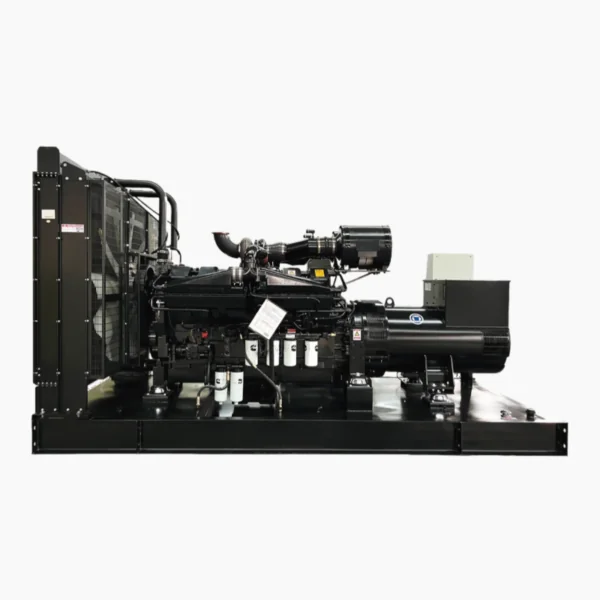
Common mistakes and practical alternatives
Teams often oversize based on peak estimates that never materialize, or they under-spec control integration and then retrofit telemetry later at higher cost. Another recurring error: ignoring site harmonics, which causes premature alternator winding heating. —Plan for a load study and a short site commissioning window with a certified trip sheet. Alternatives to pure diesel include hybrid setups with battery buffering or dual-fuel engines where emission zones permit; these are viable when duty cycles include long-run backup or when fuel supply is constrained.
Selection checklist and three critical evaluation metrics
Use these golden rules when evaluating proposals: 1) Effective capacity margin: verify kVA vs. expected continuous kW using a realistic power factor and motor starting profile. 2) Integration maturity: confirm controller firmware supports your SCADA, ATS sequencing, and remote alarms with timestamped logs. 3) Proven FAT and field acceptance: insist on witnessed load-bank tests at rated load and documented vibration/thermal scans.
These metrics translate specs into measurable outcomes: uptime, fuel efficiency, and maintainability.
Closing advisory and final thought
Choose vendors who document engine and alternator traceability, deliver witnessed FATs, and provide clear spare-parts lead times. When your project demands tailored solutions, the value lies in predictable performance and shortened commissioning cycles—exactly where Huadong’s engineering and factory acceptance processes add measurable value. Huadong Power. —